
Pattern Brain Gym Exercise
Unlock the potential of your brain with the finger movement pattern brain gym exercise promotes focus, coordination, and mental agility.
Brain Gym Exercise
Imagine a special exercise that’s like a workout for your fingers and brain both - it’s pretty amazing. This article sets out a simple hand and finger movement brain gym exercise. This exercise involves moving your fingers in specific ways, and it’s not only fun but also super good for your brain. As we explore this exercise, we’ll see how it can make your brain smarter and your fingers more agile.
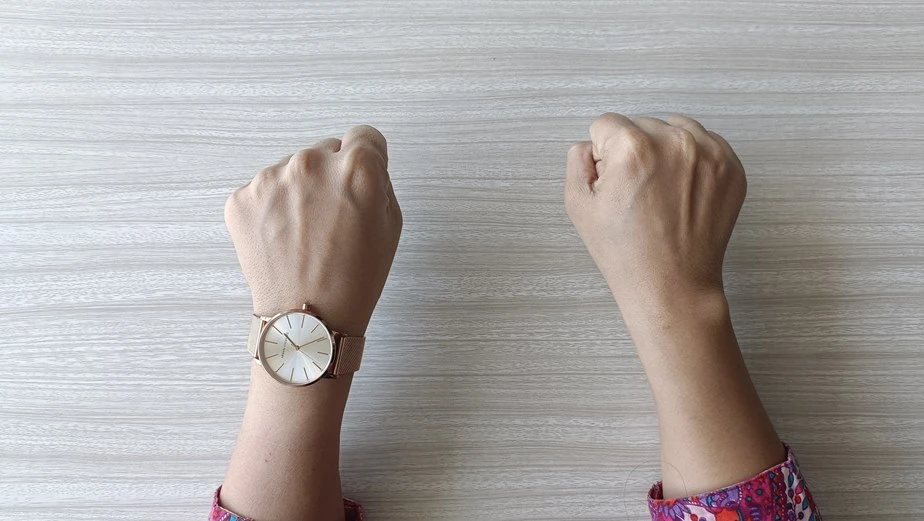
This is the first resting step. Make fists in both of your hands, with palms down position and place them side by side. You can also keep your hands in front of you, or rest them towards a table or the floor as shown in the pictures.
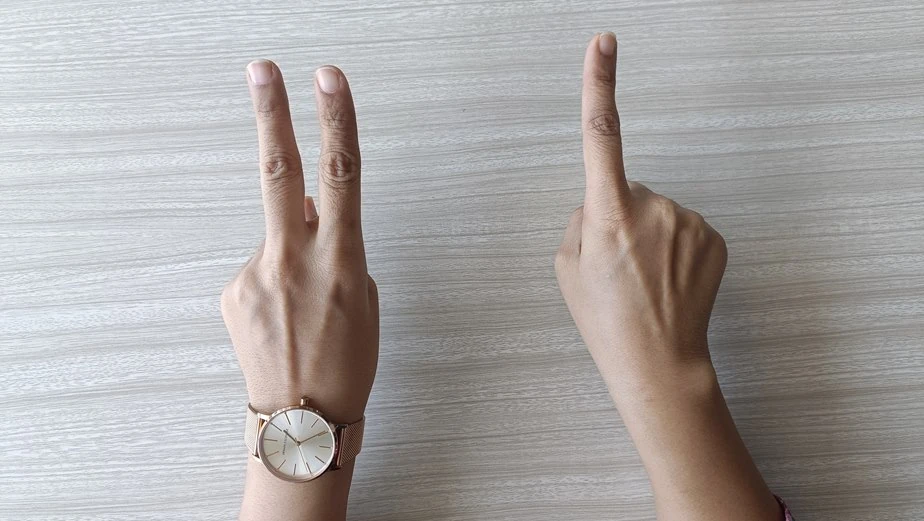
Now slowly open two fingers of your left hand and one finger of your right hand, together.
Once the fingers are open, close the fingers slowly to be back to the original resting position.
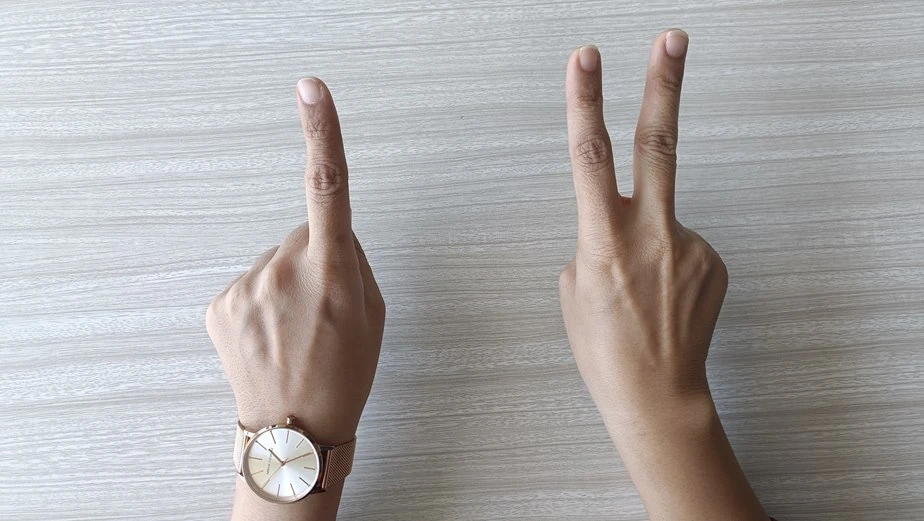
Now slowly open two fingers of your right hand and one finger of your left hand, together. This is similar to step 02, just swap the number of fingers from left to right hand and vice versa.
Close the fingers slowly to be back to the resting position.
Repeat the steps 2 to 5 slowly and steadily as you will see in the below image and the video following the image.
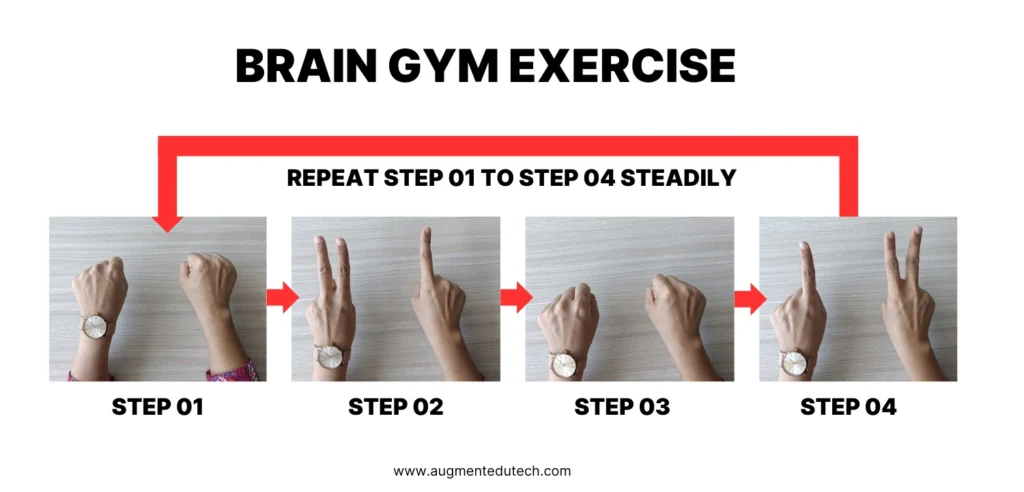
Once you get coordinated movement, increase the speed to add more complexity and enjoyment.
This is just the first level of this simple exercise.
The finger movement pattern brain gym exercise is like a secret handshake between your brain and your fingers. It’s not just about moving your fingers; it’s about making your brain sharper too. When you do this exercise regularly, you’re not only getting better at finger tricks but also making your brain work better. So, take a few minutes each day to do this exercise, and you’ll be giving your brain and fingers a fantastic workout.
Here are a few benefits of this brain gym exercises:
-
Improved Focus: These exercises challenge your brain to concentrate on specific patterns, enhancing your ability to stay focused on tasks.
-
Enhanced Coordination: Regular practice enhances fine motor skills and hand-eye coordination, making everyday tasks easier.
-
Stress Reduction: Engaging in mindful finger movements can be a relaxing and stress-relieving activity, similar to meditation.
-
Brain Agility: These exercises stimulate neural pathways, potentially boosting cognitive flexibility and problem-solving abilities.
-
Memory Enhancement: Some patterns involve sequences that can exercise your memory, potentially improving recall.
-
Increased Creativity: By engaging both hemispheres of the brain, these exercises may promote creative thinking and innovation.
-
Fun and Engaging: They provide a fun way to exercise your brain, making learning enjoyable and accessible for all ages.
-
Mind-Body Connection: These exercises strengthen the connection between your brain and fingers, potentially improving overall dexterity.
-
Accessible Anywhere: You can do these exercises almost anywhere, making them a convenient addition to your daily routine.
-
Long-Term Brain Health: While more research is needed, some studies suggest that brain gym exercises may contribute to long-term brain health.
Remember that consistency is key. Regular practice of brain gym exercises can lead to more noticeable benefits over time.
Children in our abacus classes learn a range of these coordination exercises alongside the arithmetic. Book a free trial class.
Also read: a simple brain gym exercise for beginners.



See the difference in one class
A free trial lesson with a specialist tutor, then a discussion of what the tutor found and your expectations.
- Free, with no obligation
- A tutor matched to the year and subject
- A recommendation you can act on
Book a free trial class.
Tell us your child's year group and what they are finding difficult. The last field matters most: a specific worry produces a better tutor match than a subject name.
- A live lesson, not a sales call
- A discussion of the curriculum and your expectations afterwards
- No card details, and nothing starts automatically
Request received
An advisor will email you to confirm a time in your time zone, usually within one working day.